
At the geophysical seminar, Anna Zaplavnova, a jr research scientist at the Geoelectricity Laboratory, IPGG SB RAS, presented results of integration of electrical exploration methods for identification of ore-controlling structures.
Anna Zaplavnova studied the electrical resistivity patterns of the Turuntaevskaya and Ulantovskaya ore zones for identification of deep parts of the ore-forming system. In addition, she explored the shallow part of the section to identify ore-controlling structures. Prospective ore occurrences in the geoelectric sections were studied based on magnetotelluric (MT) sounding, transient electromagnetic (TEM) surveys, and electrical resistivity tomography (ERT) with induced polarization measurements.
A set of rational methods and prospecting criteria were developed based on key indirect features inferred from electrical resistivity studies to reveal ore-controlling structures.
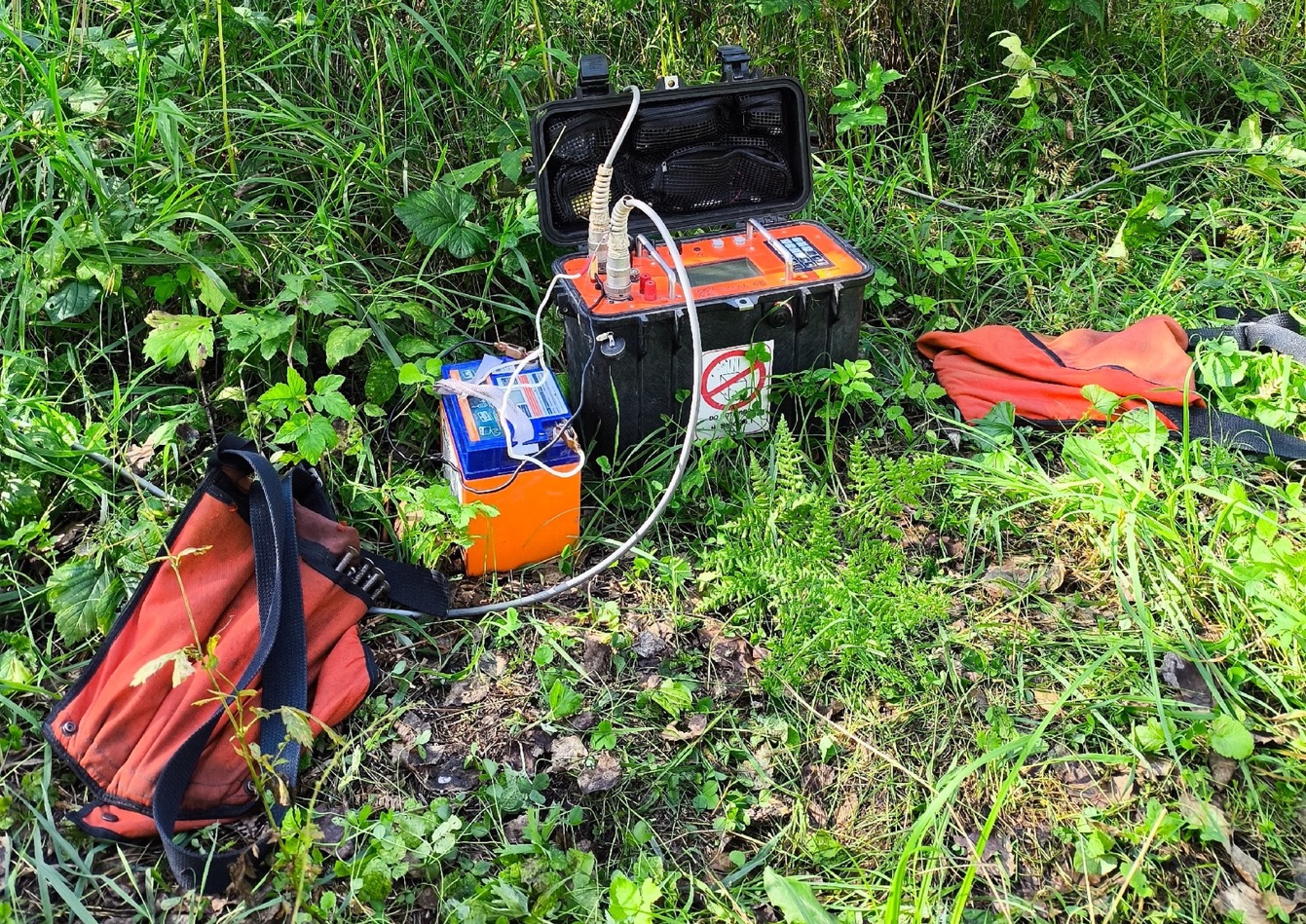
The geophysical equipment used for the measurements included Skala 48, a multi-electrode resistivity probe.
This allowed deep geophysical investigation to reveal crustal conductivity heterogeneities (i.e. significant variations in the electrical conductivity within the Earth's crust) indicative of the presence of fluid ore transfer systems in this area and spatially associated with potential ore-bearing zones.
– Correlation of the deep geoelectric structure of the Salair Ridge with the geoelectric sections of known and inferred ore clusters exemplifies application of the proposed approach to searches for potential endogenous ore occurrences in the thick overlying cover (> 50 m) of the Kuznetsk Alatau and Salair, noted Anna Zaplavnova.
The report was prepared based on the materials of Anna Zaplavnova's PhD dissertation (specialty 1.6.9 "Geophysics") supervised by Vladimir Olenchenko, DSc (geol.-mineral.). Her presentation has attracted considerable interest from colleagues who provided valuable recommendations that will be taken into consideration in preparing for the thesis defense.
Published by IPGG Press Service
Photo from the IPGG SB RAS archive