
The city of Yakutsk hosted an expert workshop “The Development of Interdisciplinary Research in Eastern Arctic: The Contribution from the Samoylov Island Research Station" held within an extended joint meeting of the Presidium of the Russian Academy of Sciences and the Government of the Republic of Sakha (Yakutia) on the topical issues of the Arctic as the Territory of New Strategic Innovative Solutions: Results, Milestones, and Challenges.
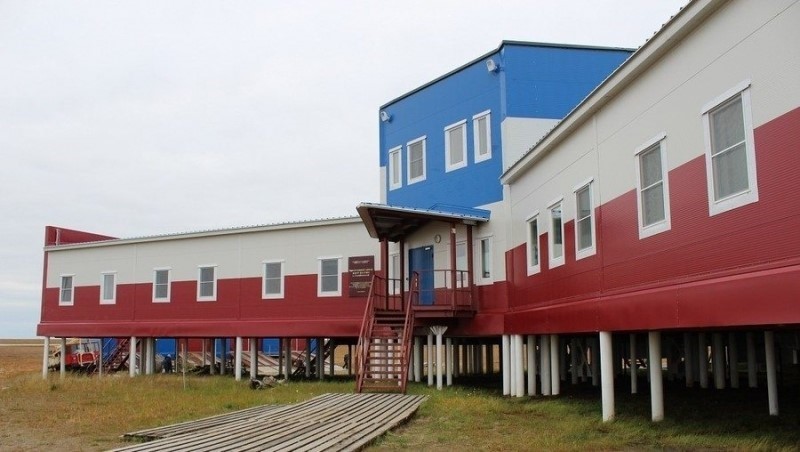
The Samoylov Island research station
The participants summoned for the meeting included: heads of the Yakut Science Center of the Siberian Branch of the Russian Academy of Sciences, representatives of the Government of the Republic of Sakha (Yakutia), the Ministry of Science and Higher Education of the Russian Federation, the Russian Academy of Sciences, the Siberian and Far Eastern Branches of the Russian Academy of Sciences, and their subordinate organizations.
The keynote speech was delivered by Vyacheslav N. Glinskikh, RAS corr. member, Director of IPGG SB RAS, a research institution which since 2013 served as operator of the renovated research station “Samoylov Island” that evolved from a base for yearly seasonal interdisciplinary Lena expeditions in the late 1990es-early 2000es to a hi-tech research facility in 2011-2012. After the meeting, V.N. Glinskikh commented on the decisions made and the approaching prospects for Samoylov RS.
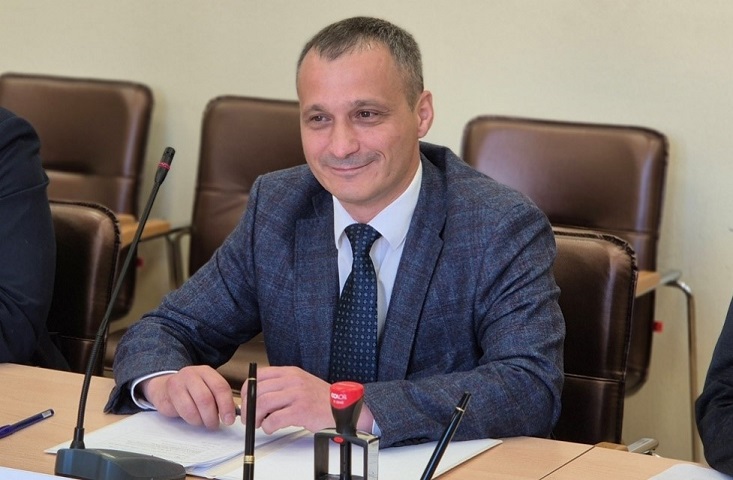
V.N. Glinskikh
Q: As is known, the Samoylov Island research station in the Lena River Delta has been successfully operating since 2013. What was the reason for the now arising debates on its prospects?
A: The existing comprehensive plan for Russia’s Arctic development for the coming years encompasses all spheres: from economics to social and scientific projects. In this regard, the research station Samoylov Island is viewed as a major scientific infrastructure in the Eastern Arctic and a key research hub in the Lena Delta, Laptev Sea, and adjacent Arctic regions.
The research station has high potential for conducting basic and applied research in permafrost science, climatology, geophysics, hydrology, ecology, biogeochemistry, space physics, Arctic materials science, and testing the technologies designed for operation in extreme natural and climatic conditions. Despite its perfectly organized on-site infrastructure (research facility and transport logistics), Samoylov RS is currently operating far below its designed capacity.
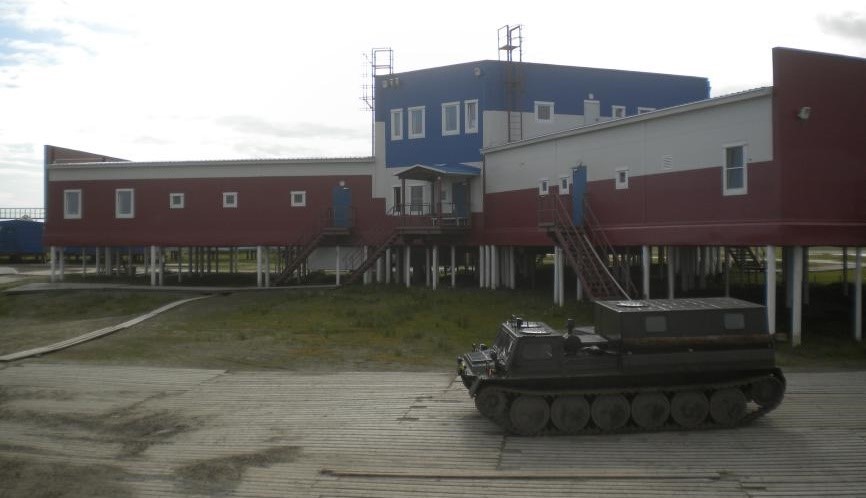
An example of all-terrain vehicles at Samoylov RS
Q: What is required to successfully execute a full integration of Samoylov RS into Russia’s Arctic research network?
A: First and foremost, it’s constructive decisions. One of the critical decisions taken by the meeting participants was to complete the transfer of the research station Samoylov Island from IPGG SB RAS and its operative management to Yakut Science Center SB RAS. This will allow maximizing the effectiveness of using the scientific, expeditionary, and technological potential of this unique research station. The deadlines for the transfer have not yet been established, but the process is definitely moving toward its logical conclusion.
Q: What types of research are planned to conduct at Samoylov RS after a change of its operator?
A: The currently being worked on program for future development of the Samoilov Island research station includes a number of research directions. These are primarily long-term observations of permafrost, climate change, the coastal zone, the hydrological regime of the Lena River delta, Arctic ecosystems, geophysical and cosmophysical processes.
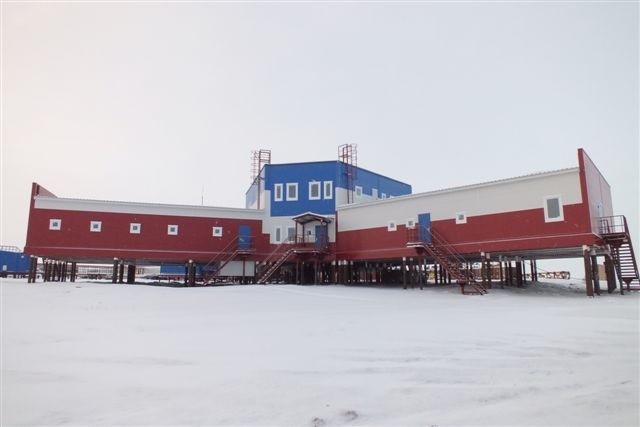
The Samoylov Island research station is exposed to the extremely cold conditions most of the year
Besides, the research station will serve as a testing ground for new materials, devices, autonomous systems, communications equipment, and engineering solutions which may also be used for regional environmental planning and infrastructure development in Arctic regions of the Russian Federation.
Implementation of continued cutting-edge polar research programs will also require involvement of larger Russian research groups from different disciplines, thus strengthening Russia's scientific presence in the Eastern Arctic. In addition, popular science tourism is envisaged along the Yakutsk-Tiksi-Samoylov Island route with an aim to nurture youth’s interest to exploring the North and Arctic and an unparalleled research opportunity offered by Samoylov RS.
Published by IPGG Press Service
Photos from the IPGG SB RAS archive