
Researchers at IPGG SB RAS believe that tailings dams and waste heaps hold significant resource and investment potential. Mikhail Mishenin, PhD (Econom.), senior researcher at the Laboratory of Ecological and Economic Modeling of Technogenic Systems, IPGG SB RAS, told us about the prospects for recycling raw materials.
Q: What makes mine tailings recycling and MT residues processing a promising area?
A: The volume of accumulated mining wastes in the Russian Federation approximates 35-40 billion tons, with an annual increase of 1.5-2.0 billion tons. Historically, they were viewed solely as an environmental problem because of the challenges associated with their management and storage. However, advancement of mineral recovery technologies and stricter environmental regulations have prompted transformation of tailings heaps into a strategic resource asset through recovery of rare earth elements and residue valorization.
This also involves a move from preserving tailings dumps to integrating them into economic circulation aligned with circular economy principles and modern environmental, social, and management standards .
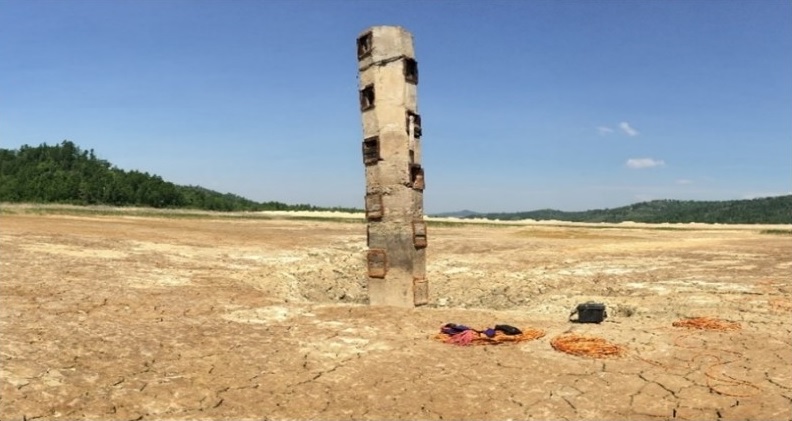
A drainage system at a tailings storage facility in Transbaikalia
Q: Russia has a number of large technogenic deposits— in the Chelyabinsk, Sverdlovsk, and Murmansk regions; Krasnoyarsk Krai, Transbaikalia, and Perm Krai, etc… I wonder if there is an effective legislation governing the management of industrial waste for such objects?
A: Russian legislation is currently developing incentive mechanisms for technogenic deposits. For example, in 2024, amendments were introduced to the law allowing the use of mining waste as secondary mineral raw materials without reclassification, provided that this waste meets established technical specifications.
The legal status of technogenic deposits however remains ambiguous, since they are regulated simultaneously by Federal Law No. 89 as waste and Federal Law No. 2395-1 as subsoil use assets, which complicates licensing and does create investment barriers.”
Q: Is it possible in principle to sell technogenic raw materials at a high profit?
A: Yes, of course. For example, at a dump site in the Jewish Autonomous Region, Class V hazard waste (practically non-hazardous to the environment) was successfully disposed of. During the works, 10000 cubic meters of original soil were processed into 13 000 cubic meters of dispersed modified soil (DMS), which can be safely used to form a remediation layer.
Selling DMS as a commercial product with a market value of approximately 1200 rubles per cubic meter generates revenue of 15.6 million rubles, with disposal costs of 9.5 million rubles. This gives a cost recovery of 164%.
Q: Can similar initiatives be expected at large technogenic mineral deposits?
A: For large reclamation sites (e.g., in Chelyabinsk Oblast, Krasnoyarsk Krai, and Perm Krai), the expenses of technical and biological reclamation initiatives are estimated from 3.3 to 15.0 million rubles per hectare, depending on the area, level of contamination, and applied technologies.
At the same time, the secondary raw materials recovery makes up for 40–60% of the reclamation costs through the sale of metal concentrates and precious metals. An additional economic benefit comes from the prevented environmental damage calculated according to the methodology recommended by the Russian Ministry of Natural Resources. For example, for a 280 hectares tailings pond, the annual prevented damage from heavy metal discharge is estimated at 180–250 million rubles, which over 15 years of operation is comparable to the total project investment costs.
All of this provides a solid foundation for attracting investment and scaling the approach to various sites within the mining industry of the Russian Federation.
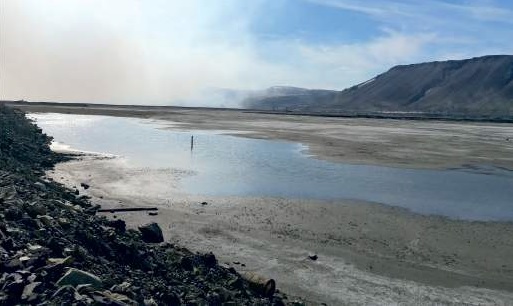
One of the tailings storage facilities in Krasnoyarsk Krai
Q: What plans do you have for developing your research further?
A: The ecological and economic models need to be refined to a greater detail, to take into account and assess regional-specific potential for extracting rare earth elements, and develop digital platforms for the tailings storage facilities monitoring. This will allow transforming the environmental burden into a sustainable resource asset that aligns with modern principles and the national goals of technological sovereignty.
Published by IPGG Press Service
Photo from the archive of IPGG SB RAS
Note
The research was carried out within the IPGG SB RAS project No. FWZZ-2026-0055 under the Basic Research Program.