
From January 29 to February 4, 2026, the second Russian-Chinese Conference on Fundamental Sciences was held in the city of Sanya (China). The conference was organized by the Sino-Russian Institute of Fundamental Research with an aim to deepen scientific collaboration and academic exchanges between China and Russia, and to commemorate the 75th anniversary of the establishment of diplomatic relations between the two countries.
The event was attended by leaders and representatives of various scientific organizations from the Russian Federation and the People's Republic of China, as well as scientists involved in Russian-Chinese collaborative research activities. At the conference, the establishment of the Sino-Russian Association of Fundamental Research (SRAFR) was officially announced. As many as five centers have been created, including the Russian-Chinese Center for Earth Sciences. Placing particular focus on the Eurasian continent and its adjacent oceans, the Center brings together leading specialists in the field of Earth sciences to conduct comprehensive scientific research in such advanced areas as geology, geophysics, geography, ecology, oceanography, atmospheric sciences, and space exploration.
During the conference, scientists addressed critical challenges, such as implementation of innovations, and new paradigms of interdisciplinary research. Extensive thematic sessions were held for each field of science."
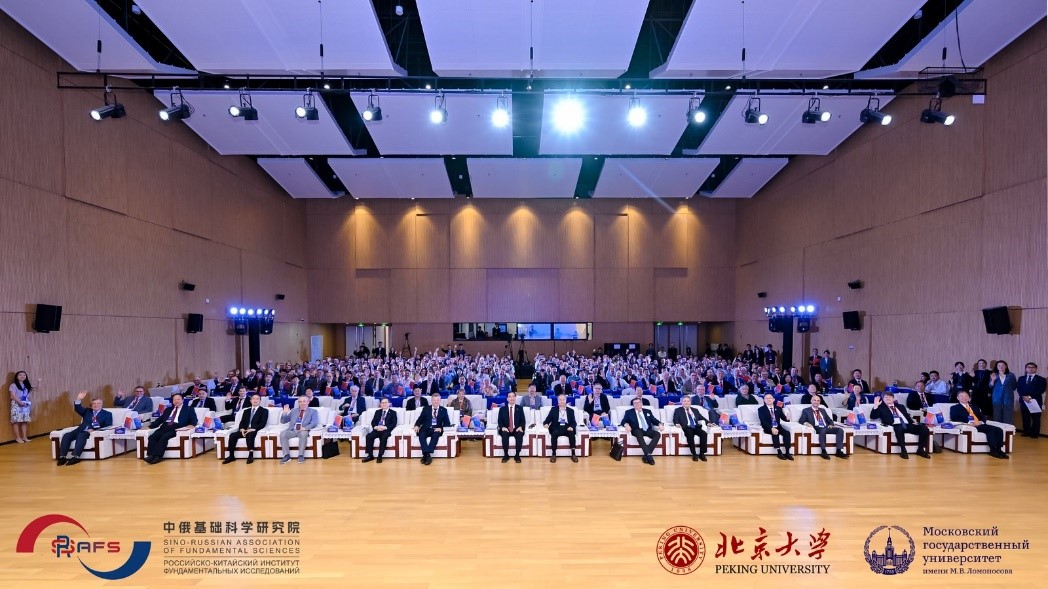
The Trofimuk Institute of Petroleum Geology and Geophysics SB RAS was represented by the deputy director for science Mikhail Fomin, PhD (geol.-mineral.), and Dmitry Grazhdankin, DSc (geol.-mineral.), head of the Laboratory of Precambrian Paleontology and Stratigraphy.
Sessions held within the frames of the subforum of the Sino-Russian Center for Earth Sciences were dedicated to paleoenvironments, paleoecology, and paleoclimate; hydrology and water resources; ecology of vegetation cover; and greenhouse gases. Other topics also discussed included the deep structure of the Earth and the evolution of the lithosphere; and the geology of mineral resources.
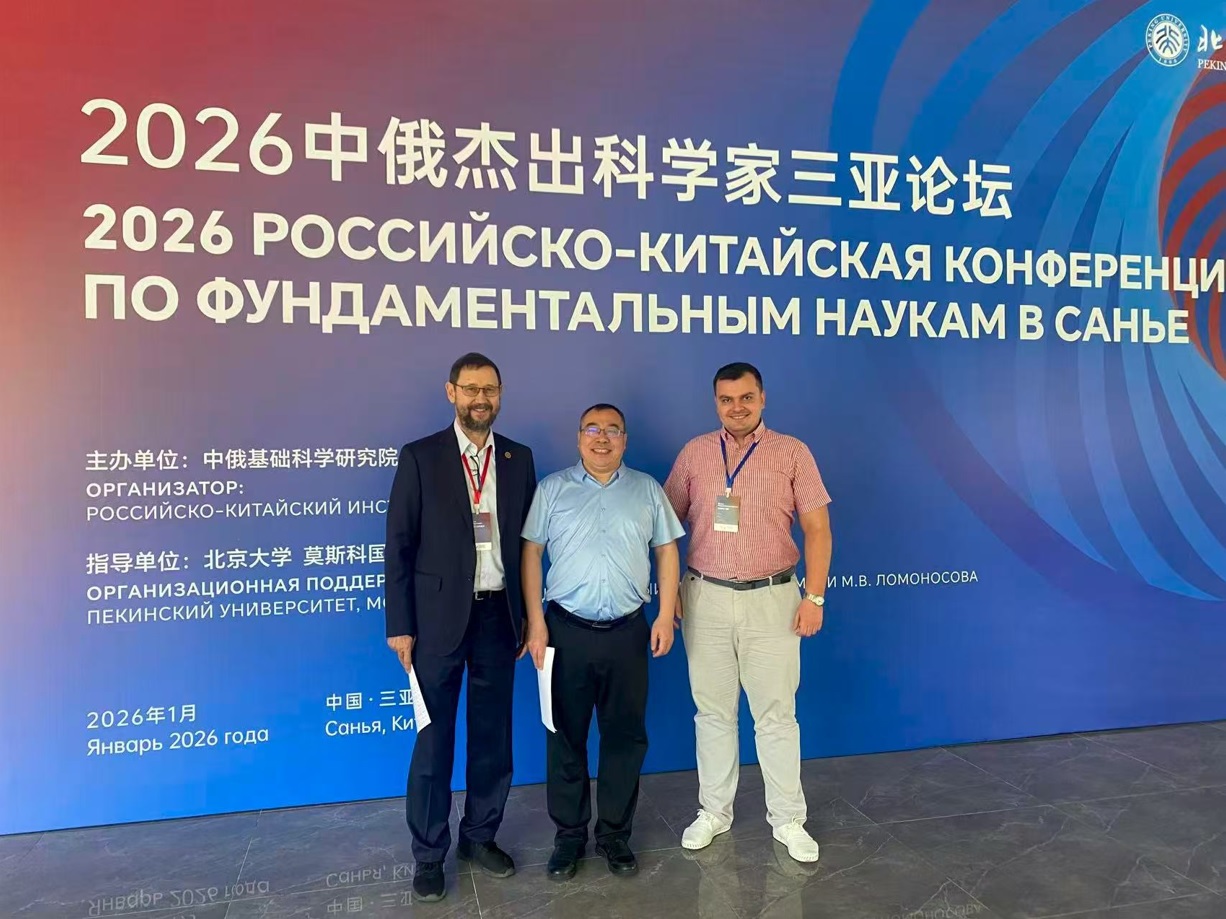
M.A. Fomin (far right) with colleagues at a conference
Special attention at the sub-forum sessions was paid to issues of hydrocarbons exploration and prospecting in Russia and China. M.A. Fomin made a presentation on the geological structure and oil potential of marine high-carbon source rocks in the West Siberian and Lena-Tunguska petroleum provinces. Given that similar source rock formations are also found in the petroleum basins of China, this opens up broad prospects for the joint study of these rock formations with the aim of comparative analysis of their generation potentials, as well as the possibility of commercial development of their oil reserves. Another possible direction of collaborative research of the Chinese and Russian geologists would be the geological structure and petroleum potential of sedimentary basins in Northeast Asia.
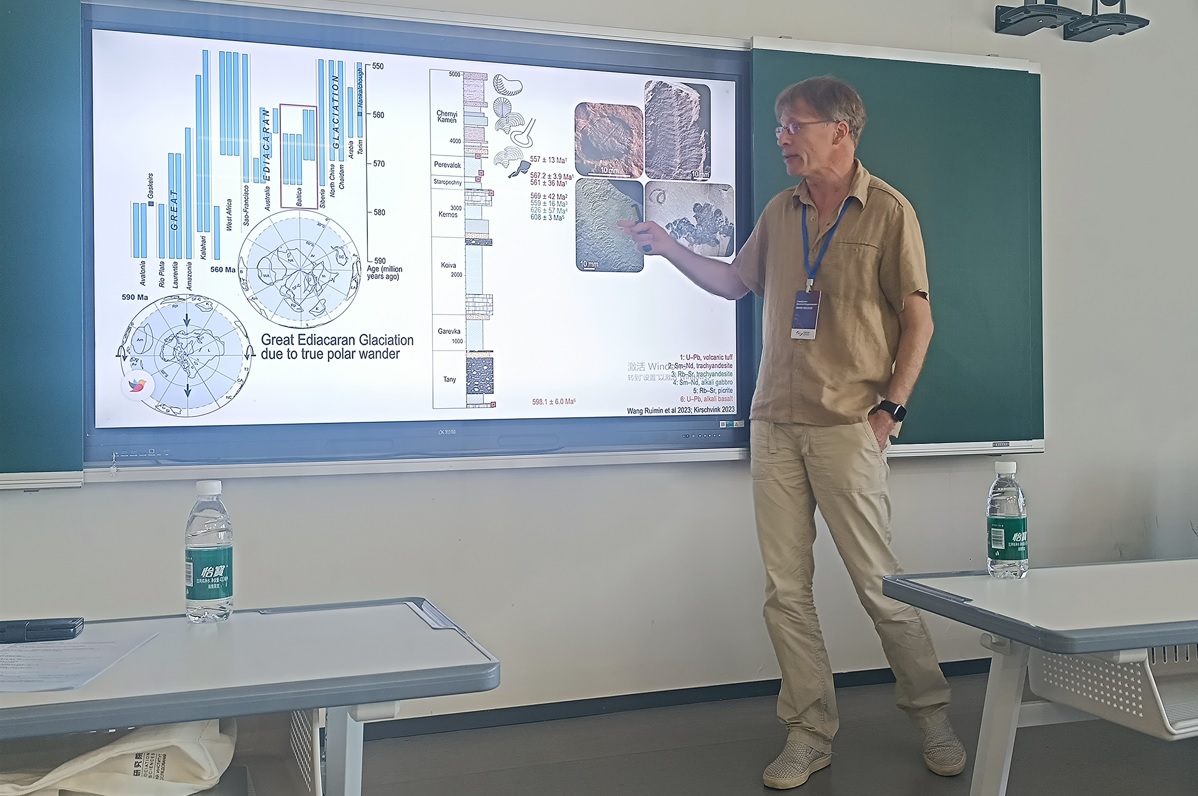
In his report, D. Grazhdankin outlined possible directions for future collaboration between geologists of the two countries with the aim of studying the origin of the biosphere. The key potential research areas for the scientific cooperation included: the formation of habitability conditions in the evolution of the early 'planet Earth' system; the integration of hypotheses about the 'Cambrian explosion' of biodiversity with facies, paleogeographic, and stratigraphic reconstructions; and terrestrial- marine 'teleconnections' in the Devonian. Chinese colleagues are open to broader cooperation.
In addition to the scientific sessions, the conference featured thematic round tables where different challenges in the international cooperation were discussed, in particular, difficulties with the exchange of geological samples for scientific study and the organization of joint expeditions. During the meetings, proposals were formulated for the relevant authorities in Russia and China to address these issues.
Academician Jin Zhijun, Professor Zhang Laifei, and Professor Shen Bing, who visited IPGG SB RAS as part of the delegation from Peking University in 2025 also actively participated in the work of the sub-forum. The 2025 visit was marked by signing a cooperation agreement between the Trofimuk Institute of Petroleum Geology and Geophysics SB RAS and the School of Earth and Space Sciences of Peking University.
Mikhail Fomin reminded that IPGG’s interaction with Chinese colleagues began decades ago, when this work was led by Academician Alexey Kontorovich, the founding director of the Trofimuk Institute of Petroleum Geology and Geophysics (IPGG SB RAS). Today, scientists continue to develop the directions he established and those emerged in the context of the recent international cooperation.
In the future, scientists from the two countries plan to conduct joint scientific research on geological structures in the territory of Russia and China, joint expeditions and publications, as well as participation in international grant projects for Russian and Chinese scientific organizations.
Published by IPGG Press Service
Photos courtesy of M.Fomin and D.Grazhdankin