
The main part of the journey lasted 49 days—from December 17, 2025, to February 3, 2026. Aboard the research vessel Akademik Nikolay Strakhov, scientists conducted integrated geological and geophysical studies in two deep-sea locations in the Atlantic Ocean. The work was conducted on the eastern flank of the Mid-Atlantic Ridge (North Atlantic) and in the area of the Great Meteor-Atlantis seamounts (Central Atlantic).
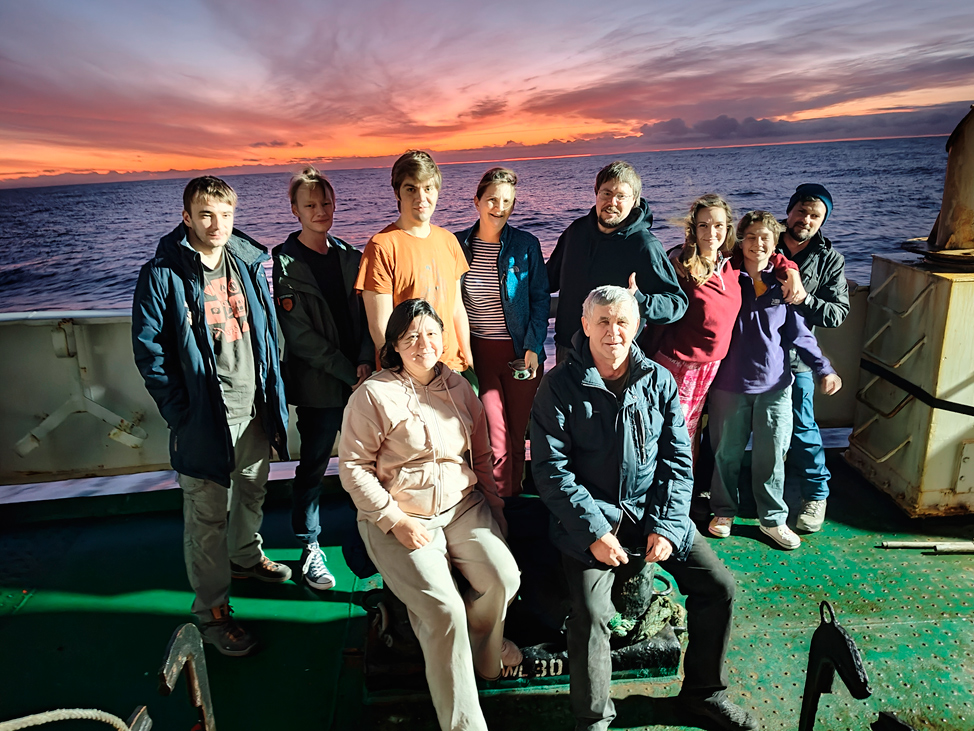
Members of the Expedition
The expedition participants represented six research organizations of the Russian Academy of Sciences, including Geological Institute (GIN RAS, Moscow), Shirshov Institute of Oceanology (IO RAS, Moscow), Institute of Geology of Ore Deposits, Petrography, Mineralogy, and Biochemistry RAS (Moscow), Trofimuk Institute of Petroleum Geology and Geophysics (IPGG SB RAS, Novosibirsk), and VNIIOkeangeologiya (St Petersburg). Dmitriy Kuleshov, a research fellow at the Laboratory of Natural Geophysical Fields participated on behalf of IPGG SB RAS.
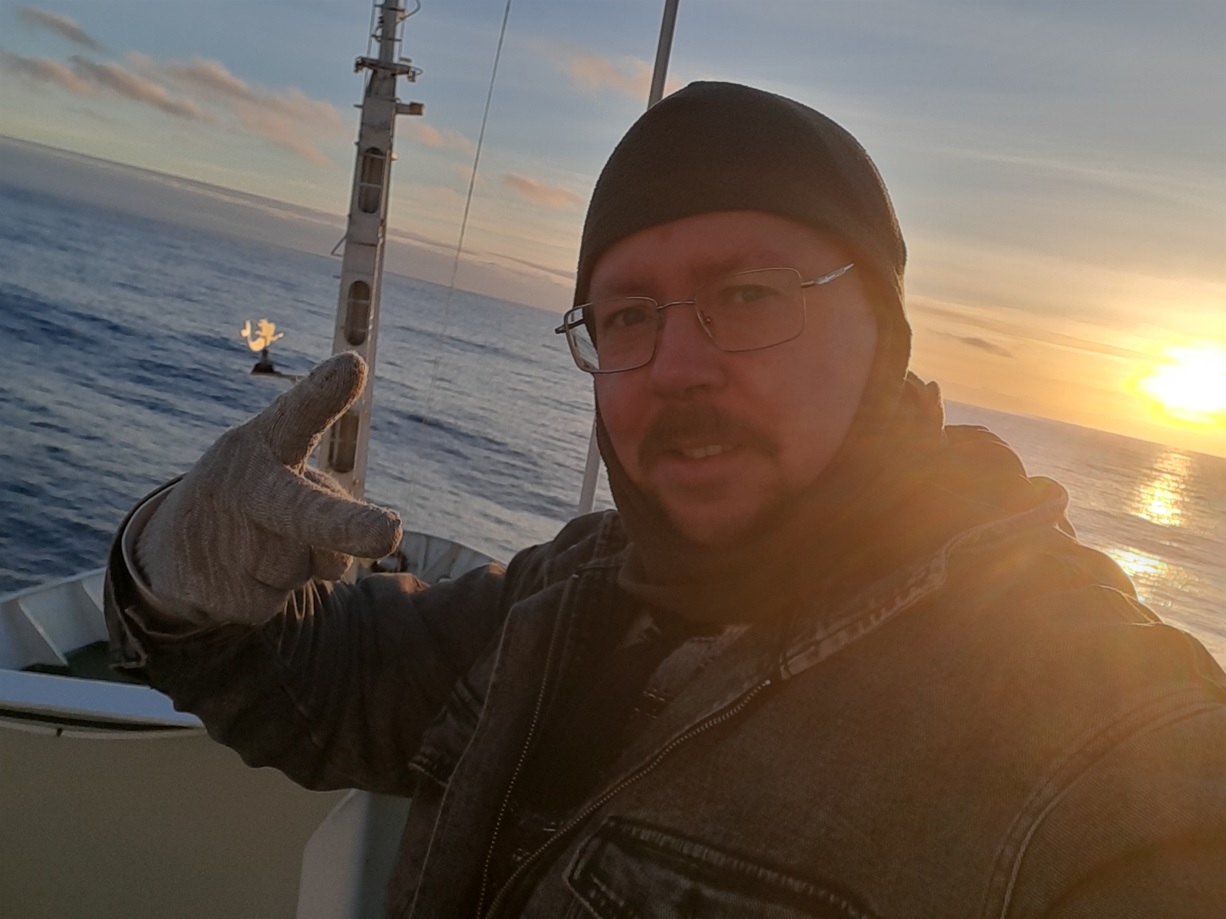
D.A. Kuleshov on board the research vessel drifting in the low-wave, mid-Atlantic.
Bottom sediment were sampled during the expedition to determine the composition of the upper oceanic crust in the study areas. The resulting samples were described, preliminarily classified, and processed for subsequent lab analysis. Further study of these materials will help draw conclusions about the tectonic and magmatic phenomena and processes occurring in the ocean floor.
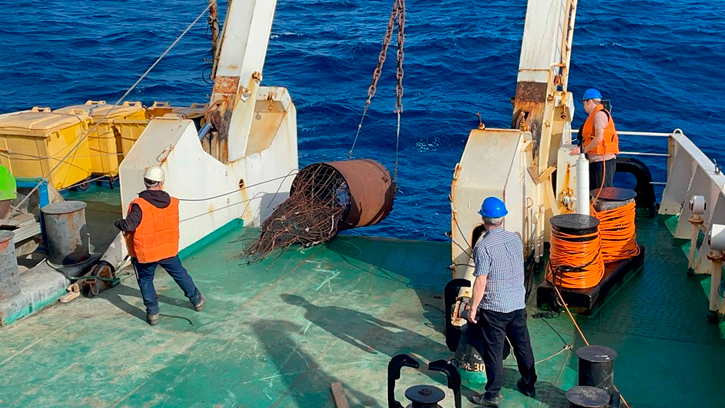
Bottom sediment sampling by dredging
The bathymetric survey resulted in the construction of two medium-scale bathymetric maps (1:100 000) covering the areas of 8,400 km2 and 25,000 km2. Analysis of these maps not only will enable tectonic zoning of the investigated areas, but also provide new insights into the nature and mechanism of intraplate tectonic and volcanic processes that shaped the seafloor mountain system.Based on the conducted hydromagnetic marine survey results, anomaly magnetic field maps of the surveyed areas were generated. Analysis of these maps will make it possible to identify linear magnetic anomalies, determine the age of the ocean floor, and built geological and geophysical models of magnetic anomaly sources.
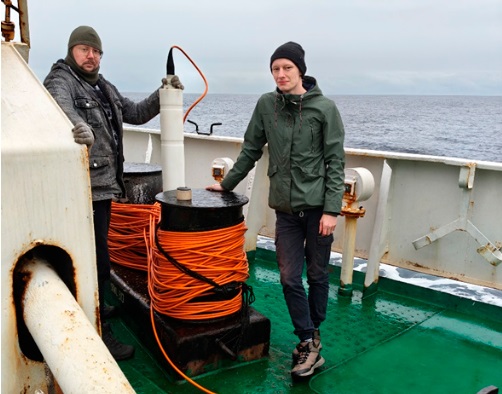
D.A. Kuleshov (left): preparing the equipment for hydromagnetic survey
The researchers also studied the acoustic stratigraphy of mid-to-late Quaternary sediments in the study areas. Analysis of the resulting seismograms will allow them to reveal signs of neotectonic activity and degassing, and density/ extent of their distribution.
These results will be described in detail in scientific publications and presented at conferences. The researchers anticipate continuing this work in the Atlantic Ocean.
"During the expedition, force majeure events occurred repeatedly, making us sometimes change our plans," noted D.A. Kuleshov. "But at the end of the day, thanks to the coordinated efforts of the crew and the scientific team, all work was successfully completed. Besides the hard work, the team also engaged in leisure cultural activities. For instance, we staged a performance on New Year's Eve."
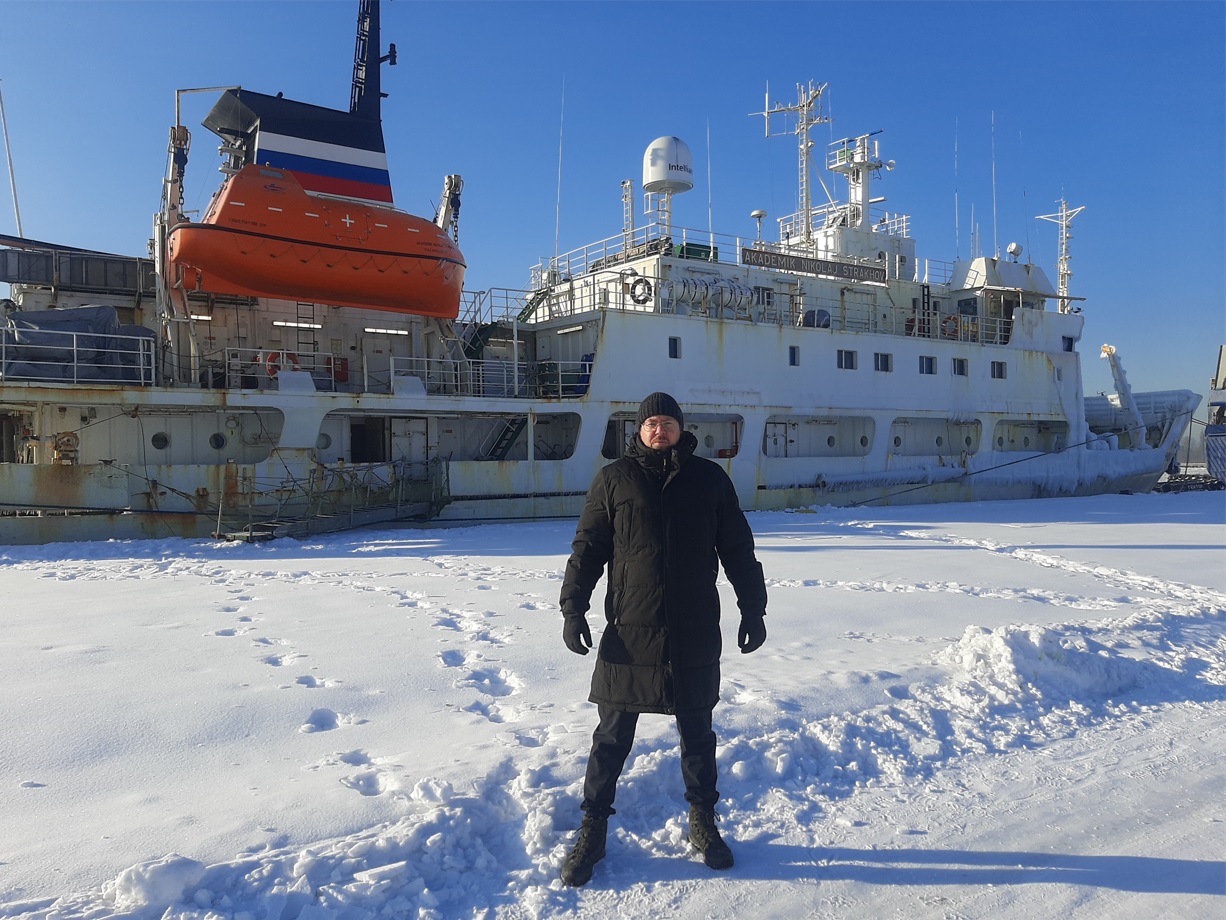
"Welcome back!" – D.A. Kuleshov at the RV Akademik Nikolay Strakhov, February 3, 2026 (upon arrival at the port of Kaliningrad)
Published by IPGG Press Service
The materials used were partly provided by S.A. Skolotnev, DSc (geol.-mineral.), head of the expedition. (GIN RAS, http://ginras.ru/news/news.php?uid=2783)
Photos: from the GIN RAS archive (1, 3, 4); courtesy of D.A. Kuleshov (2, 5)