
The international conference "Asian Track: Natural and Human Dimensions" is held in Chita, Zabaykalsky Krai on September, 7 – 11, to mark the 45th anniversary of the Institute of Natural Resources, Ecology and Cryology SB RAS (Siberian Branch of the Russian Academy of Sciences). The event allows scientists to assess current activities, gain insights into unique characteristics of the region and people living there, in order to map out its future development trajectory. Among conference participants, Academician Mikhail I. Epov represented the Trofimuk Institute of Petroleum Geology and Geophysics (IPGG SB RAS) as its scientific advisor.
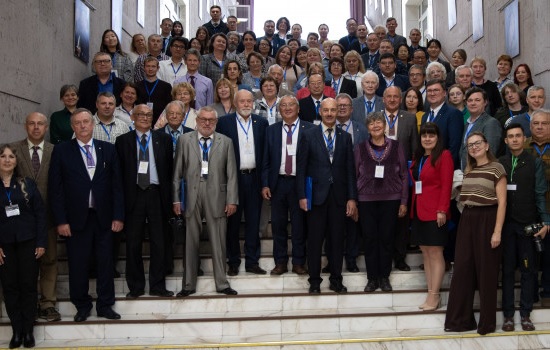
In her welcoming remarks, Natalia Vikulova, Minister of Science and Vocational Education of the Zabaykalsky Krai, highlighted the region's reliance on the scientific achievements of Institute of Natural Resources, Ecology and Cryology (INREC SB RAS). "The Institute also practices active participation in science outreach, helping with educational and methodological materials and creating new spaces for promoting science," Natalia Vikulova said. She added that the current scientific and technological development program envisions support for research within the region, as well as collaboration with the Far Eastern and Siberian Branches of the Russian Academy of Sciences, and scientific organizations in central Russia.
Academician Nikolai P. Pokhilenko, Deputy Chair of the Siberian Branch of the Russian Academy of Sciences (SB RAS), emphasized that INREC addresses a diverse range of challenges by integrating fields crucial to the region's development—such as permafrost studies, geology, economics, biology, etc. "This enables creation of research chains based on partnerships between researchers that yield strong results, thereby bringing together many outstanding scientists," Nikolai Pokhilenko concluded.
Andrey A. Tulupov, SB RAS Chief Scientific Secretary, RAS Corr. Member, announced plans to celebrate the 70th anniversary of the Siberian Branch (SB RAS) next year. He noted that a meeting like today's offers a unique opportunity to hear firsthand—in the run-up to the anniversary—about progression of science in different domains. "SB RAS is renowned for its interdisciplinary approach; many results emerge at the intersection of different sciences. The fact that INREC SB perfectly exemplifies this can be seen from the name of the Institute," Andrey Tulupov said.
Academician Yendon Zh. Garmaev, Director of the Baikal Institute of Nature Management (SB RAS, Ulan-Ude), highlighted the collaborative efforts bridging the two institutes: "Our common history has defined the trajectory of our cooperation based on trust and mutual support. We deeply value the professionalism and personal qualities of our colleagues. Today, Transbaikalia is viewed as a strategic hub, a fact underscored by the diversity of the conference’s presentations and sessions," said Yendon Garmaev.
Dong Suocheng, a leading professor of CAS (Chinese Academy of Sciences), Director of the Northeast Asia Center for Sustainable Development Research, and representative of the Institute of Geographic Sciences and Natural Resources Research (CAS, Beijing)—drew attention to the significant natural and environmental challenges facing researchers in the region. "Russia, China, and Mongolia share a long history of economic cooperation, given their location within the same macro-region. It is crucial to study this region from various perspectives and to pool the efforts of multiple countries; strengthening international ties—particularly across Eurasia—is of great importance," Dong Suocheng noted.
Igor E. Mikheev, PhD (Geogr.), Director of INREC SB RAS, emphasized that for a regional scientific institution, a 45th anniversary is not merely an occasion to review its history, but also a starting point for scientific dialogue. "Transbaikalia serves as a strategic gateway to Asia—a place where relationships between natural and social processes (human and nature) are harmonized and where the efforts of Russia, Mongolia, and China converge," said Igor Mikheev.
The conference's plenary session focused on scientific presentations. Igor Mikheev presented the achievements of Institute of Natural Resources, Ecology and Cryology SB RAS to his colleagues, highlighting two key research directions: the composition, structure, and evolutionary patterns of the geo- and ecosystems of Central Asia (covering geological, geographical, biological, physical, and climatic aspects); and the ecological-economic and socio-demographic factors influencing Russia's development—including Siberia and the Far East—with due regard for transboundary interactions. Within these areas, he highlighted several specific results, such as a predictive exploration model for the Shakhtama ore cluster; long-term studies of mineral springs which abounds (over 300 of them) in Eastern Transbaikalia; research on bodies of natural cold water (with temperatures ranging from –70°C to +4°C); the identification of geochemical water types with high rare-earth metal content in mining areas; hydrochemical monitoring of urban agglomerations; studies of the carbon balance and assimilation potential of forests in the Zabaykalsky Krai; and various other projects. According to Igor Mikheev, the institute is actively engaged in addressing environmental issues: it has studied the reintroduction of the Mongolian gazelle (*dzeren*) to the Zabaykalsky Krai and has developed and implemented mechanisms and tools to conserve natural complexes of global significance—including the establishment of over 15 specially protected natural areas. "The institute employs 102 people and produces over 100 scientific publications annually. INREC is actively involved in expert activities, collaborates with RAS institutes and universities, and operates two field research stations," Igor Mikheev said, describing the organization. A source of particular pride for the institute is the discovery of a new ornithischian feathered dinosaur (Kulindadromeus zabaikalicus); findings regarding this discovery were published in the Science journal.
Academician Arnold K. Tulokhonov, Scientific Director of the Baikal Institute of Nature Management (SB RAS, Ulan-Ude), presented a report titled "On the Development Strategy for Asian Russia in a Changing World: New Challenges and Solutions." He began by outlining the history of research and development in the Trans-Baikal region and the Russian Far East, highlighting the challenges the territory faces today. "Unfortunately, we are currently seeing population decline and out-migration; according to VTsIOM data, about 28% of residents wish to leave, while existing support measures—such as the 'Far Eastern Hectare' program and the creation of university campuses—are not proving sufficiently effective," Arnold Tulokhonov stated. He drew upon the experience of other nations, particularly China, noting that support for scientific research—alongside a planned economy and the fostering of patriotism—has been a key factor in successful policies aimed at population growth.
Academician Yevgeny A. Vaganov, Scientific Director of Siberian Federal University (Krasnoyarsk), gave a presentation titled "Prospects for Dendroecology and Dendroclimatology: The Russian Contribution." "Tree rings provide information about the various environmental conditions in which a plant lived over a long period; by comparing these rings, we can analyze climatic responses on an annual basis," Yevgeny Vaganov said, emphasizing the importance of such research. He showcased a series of studies conducted by Krasnoyarsk-based specialists in this field, specifically highlighting the simulation-based (process-oriented) VS model, which describes variations in woody plant growth in relation to climatic factors at a daily resolution. "Currently, more than 40 research groups are utilizing this model," Yevgeny Vaganov stated.
Mikhail I. Gladyshev, Corresponding Member of the Russian Academy of Sciences (RAS) and Head of the Laboratory of Experimental Hydroecology at the Institute of Biophysics (Krasnoyarsk Science Center, Siberian Branch of the RAS), delivered a presentation titled "Managing Natural Ecosystems: How Do We Heal a Lake?" He explained that phosphorus is a key factor influencing cyanobacterial blooms; while anthropogenic runoff is a known source, the water body itself can also serve as a source, as the element accumulates there during natural cycles. "Methods for combating blooms include dredging bottom sediments, aeration, and water mixing," Gladyshev noted. However, he pointed out that dredging offers only a temporary solution, while aeration can sometimes have negative effects. He discussed "top-down" biomanipulation in detail—a technique also being studied by scientists in Krasnoyarsk. This approach is based on the trophic cascade hypothesis, which suggests that regulating the population of predatory fish can reduce algal blooms. One interesting finding Gladyshev shared was that cyanobacteria grow significantly faster after passing through the digestive tract of the crucian carp (which ingests them while feeding). A mathematical model indicated that reducing the population of this fish could curb blooms—a prediction that was subsequently confirmed experimentally. According to Gladyshev, another challenge is the proliferation of *Spirogyra* algae, which leads to "green tides." "There is a hypothesis that it may be linked to the localized influx of nutrients resulting from the discharge of groundwater contaminated with nitrogen," said Mikhail Gladyshev, adding that the possibility of controlling the Spirogyra species in the Yenisei by regulating flow velocity in specific areas is currently being studied.
Academician Andrey Ge. Degermendzhi, Director of the Institute of Biophysics at the Federal Research Center "Krasnoyarsk Science Center" (SB RAS), discussed approaches to managing urban air quality. "This is a comprehensive project that takes various aspects into account," Andrey Degermendzhi emphasized. Elaborating on these aspects, he cited the preparation of geospatial data—including local climate zones—as well as background monitoring databases, the classification of pollution sources, the collection of retrospective and current data, the localization of chemical transformations (accounting for both anthropogenic and natural contributions), mathematical models at various scales (global, city-wide, and street-level), monitoring of the vertical temperature distribution in the atmosphere, and several others. Future plans include the creation of an aerodynamic laboratory testbed (in collaboration with the Kutateladze Institute of Thermophysics, SB RAS); this facility will represent a model city where various climatic processes are simulated—adjusted for scale—to verify and validate data. Expected outcomes include a digital twin of the atmosphere capable of analyzing the entire chain of impacts linking emission sources to pollution receptors across Krasnoyarsk—down to specific points within the city—and generating predictive calculations, as well as developing new scenarios for managing pollution sources to mitigate the negative health impacts of poor air quality on the city's population. "In the long run, we anticipate having the configurable models with capability to adapt to any city in Siberia, depending on the specific objectives," Andrey Degermendzhi concluded.
Academician Mikhail I. Epov, Scientific Supervisor of IPGG SB RAS, discussed the prospects for developing a gas field in the Onon Depression. "Back in 2014–2015, aeophysical survey was conducted, subsequently supplemented by a gas-geochemical survey, which established the presence of gas-condensate deposits in the northern part of the Onon Depression. The time is ripe to revisit this project and drill an exploratory well—especially given that the Trans-Baikal Territory is being transferred to the Far Eastern Federal District, a region where the energy sector receives immense attention," said Mikhail Epov. He also proposed including an item in the conference resolution regarding the preservation of the Trans-Baikal Territory’s archives.
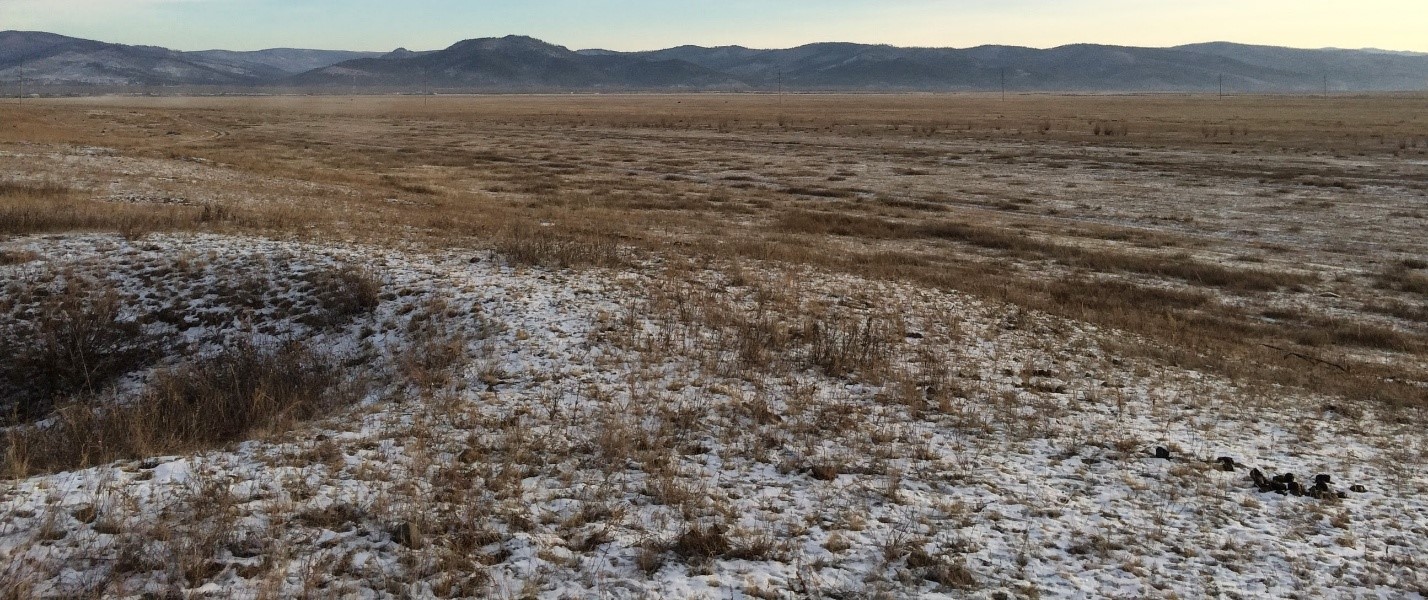
Onon Depression, Zabaykalsky Krai
In his presentation, Dong Suocheng detailed the achievements and future prospects of the "China–Mongolia–Russia" transboundary scientific expedition, a project spanning two decades. "Thirty institutes, eight universities, and approximately 300 experts have participated in this work," the Chinese researcher stated. He noted the Russian Academy of Sciences' support for this long-standing collaboration and emphasized the project's focus on economic and environmental aspects.
Academician Igor V. Bychkov, Director of the Matrosov Institute for System Dynamics and Control Theory (SB RAS, Irkutsk), addressed the impact of flow regulation on the Uldza River on the biodiversity of the transboundary Daurian ecoregion. He discussed the Torey Lakes ecosystem in detail, explaining how fluctuations in water surface area and quality affect various species of fish and waterfowl. The Uldza River feeds this lake system but is currently being considered as a water source for irrigation and mining operations; notably, a canal already exists connecting the Uldza and Teliin-Gol rivers, which has reduced water inflow into the Torey Lakes. Scientists determined that a planned reservoir on the Uldza River in Mongolia would function effectively only during periods of average or high water levels; however, the river has experienced prolonged low-water periods in recent years, potentially compromising the reservoir's operation. Furthermore, the construction of the reservoir threatens the biodiversity of waterfowl, wading birds, and fish, as well as the overall water resources of the Torey Lakes, ultimately undermining the ecological security of the Russian section of the Daurian ecoregion. Igor Bychkov therefore proposed formally requesting that the Mongolian side abandon the dam and reservoir construction project.
Fieldwork in the Torey Lakes area
The conference proceedings continued across five sessions: Russia’s ecological-economic and socio-cultural development trajectories in the Asian context; natural-ecological and cultural-historical capital of territories: an integrated assessment; Transbaikalia as a strategic hub of the Asian region: historical-economic analysis and resource potential; evolution of the Asian region’s geo- and ecosystems: an interdisciplinary synthesis; and interregional and international ties in Asia: historical continuity and modern trends. Papers were presented by scientists from Russia (Novosibirsk, Irkutsk, Krasnoyarsk, Kyzyl, Barnaul, Petropavlovsk-Kamchatsky, and other cities) as well as researchers from the Institute of Geographic Sciences and Natural Resources Research of the Chinese Academy of Sciences.
Source: "Science in Siberia" (https://www.sbras.info/articles/organizaciya-nauki/sibirskie-uchenye-obsuzhdayut-sovmestnye-raboty-v-azii)
Photo by Yulia Pozdnyakova (1); photos from the IPGG SB RAS archive (2, 3)